مواعيد العملمغلق
|الأحد, سبتمبر 13, 2026Piazza San Marco, Venezia, Italia
العودة إلى travel
history
Campanile 1902 Collapse – What Happened and What Changed
Understand why St. Mark’s Campanile collapsed in 1902 and how Venice rebuilt it ‘as it was, where it was’.
2/8/2025
14 min read
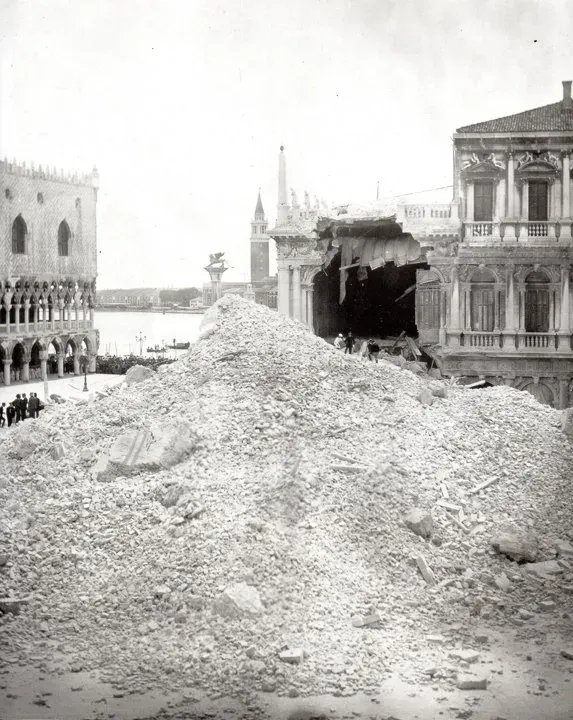
On 14 July 1902, the Campanile cracked, leaned, and finally crumbled — miraculously harming no one. Venice rebuilt it “com’era, dov’era.”
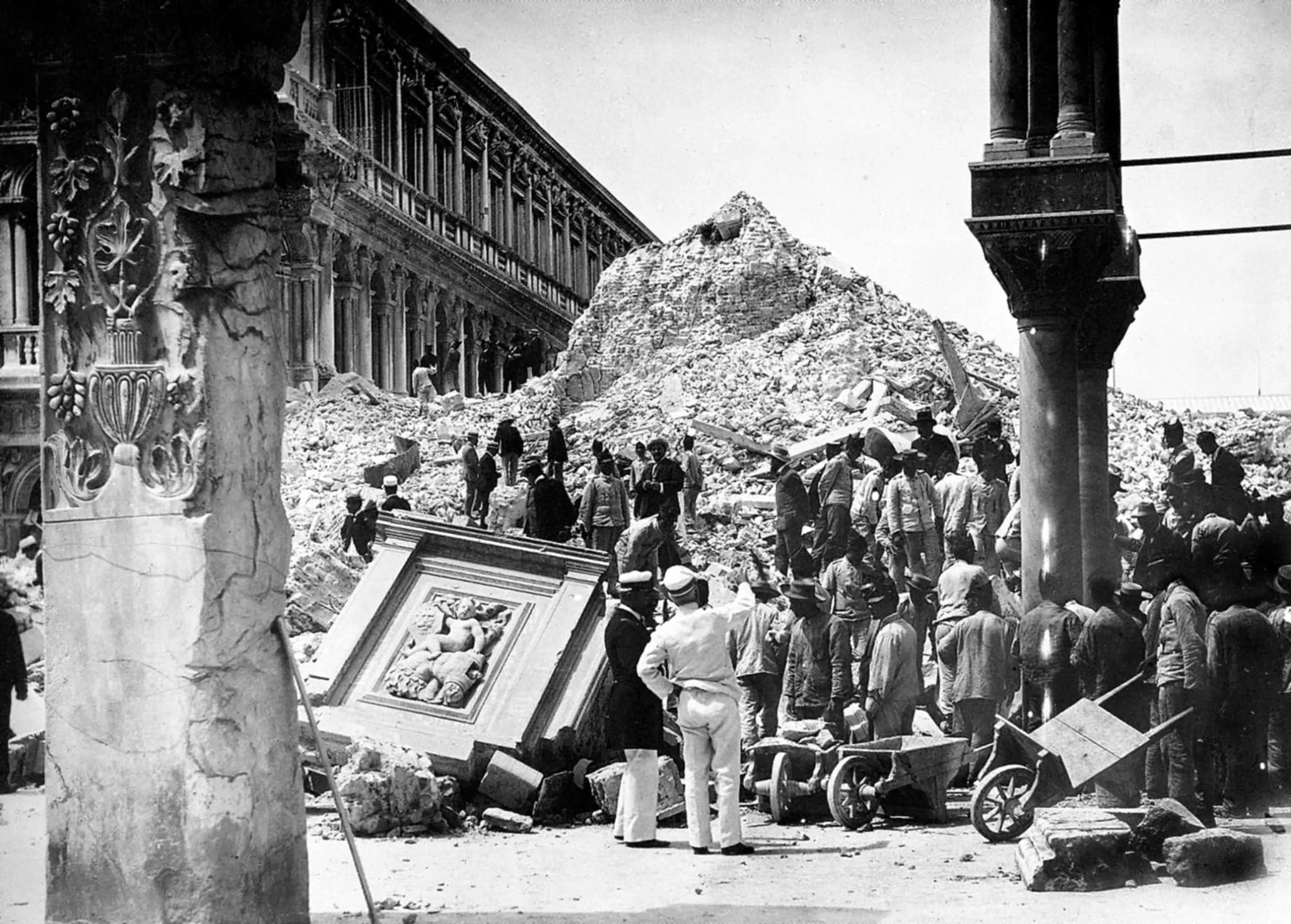
Table of Contents
Why It Fell
- Structural fatigue in the base, lightning, and centuries of micro-damage.
- Repairs lagged behind stresses; small fissures became fatal.
How It Rose Again
- Conservative rebuild: replicate outward form, modernize inside.
- Foundations reinforced; materials and techniques reconsidered.
Myth vs Fact: It’s not the “original,” but a faithful, careful twin with safer bones.
Legacy Today
The Campanile stands as a Venetian promise: tradition maintained by responsible renewal.
Myth vs Fact
- Myth: “It fell without warning.” — Fact: Warning signs and cracks preceded the collapse.
- Myth: “They changed the look.” — Fact: Exterior was replicated; interior safety improved.
- Myth: “No parts survived.” — Fact: Fragments, records, and photos guided the rebuild.
Where to Look Now
- Study archival photos on-site to compare proportions.
- Notice the Loggetta and base stonework lines as renewed seams of history.
عن الكاتب

Venice History Expert
كتبنا هذا الدليل لتكون زيارتك لِسان ماركو أسهل وأكثر ثراءً وبنَفَس محلي.
Tags
Campanile
History
1902 Collapse
Reconstruction
Comments (0)
Leave a Comment
Loading comments...